iv project space

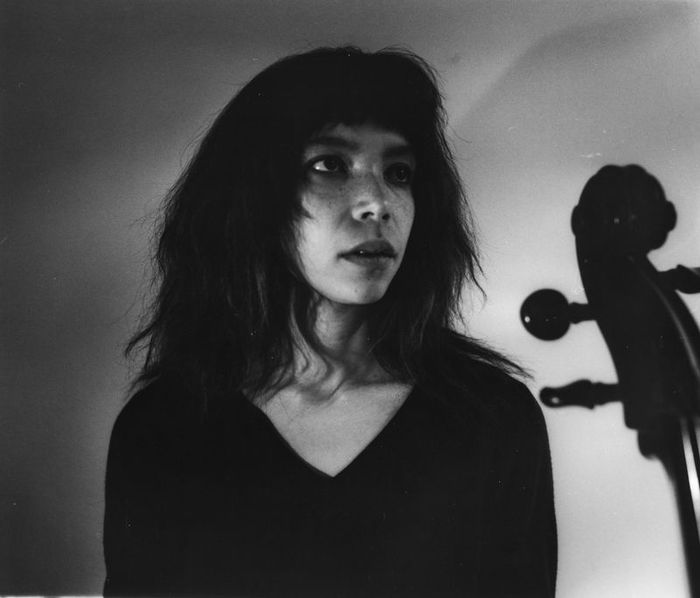
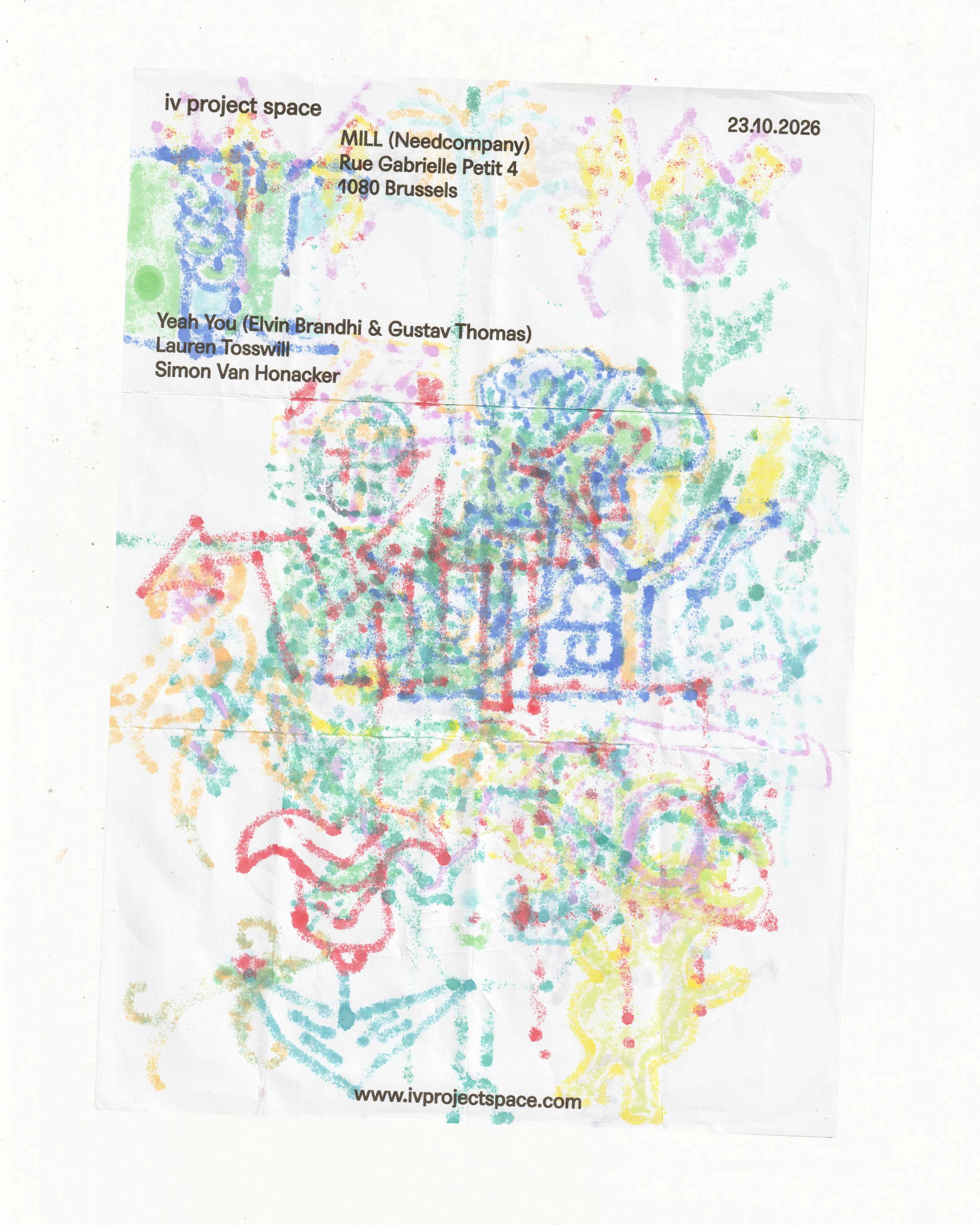
event poster for IV29: Áine O’Dwyer & Rhodri Davies, Billy Steiger, Suzan Peeters

IV29: Áine O’Dwyer & Rhodri Davies, Billy Steiger, Suzan Peeters

In vitro #29

Our next event is all about instrumentation—in relation to space, time, texture—working against and across the borders of its usual compositional confines. It is also an evening of firsts: we’ll present the debut duo performance by Áine O’Dwyer and Rhodri Davies. Two radical musicians at the forefront of improvisation, weaving together harp with elements of folk, sound art, and long-form composition.

They will be joined by violinist Billy Steiger, known as Café Oto’s sound wizard and projects such as O YAMA O and X-Ray Hex Tet, who played In vitro in 2024. He now returns with a new solo, intertwining a single-string instrument with a visual component.

Lastly, local musician Suzan Peeters presents a rendition of her debut record Cassotto, named after the small resonating chamber inside the accordion that warms, softens, and deepens its tone. The work unfolds as a deep-critical investigation of the instrument, pushing the acoustic spectrum to its limits by manipulating the interplay of the body—both human and object.

This event is made possible with the support of Flanders State of the Art.

Entrance: €15
Doors: 20h00

MILL (Needcompany)
Rue Gabrielle Petit 4
1080 Brussels
Tickets

Upcoming events:

Saturday 07 February 2026

Tickets

Blog

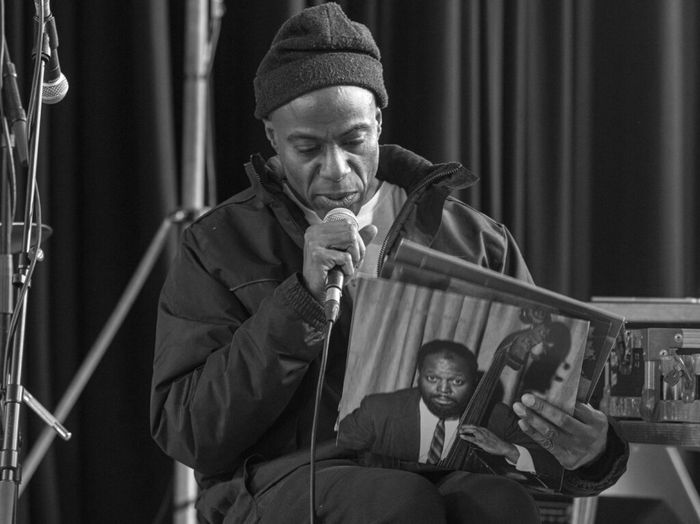
Event: Edward George's ‘Strangeness of Jazz’

© Edward George

Due to unforeseen circumstances, أحمد [Ahmed] had to cancel their performance and, consequently, our accompanying book presentation at STUK. We’re currently working on finding a new date in the foreseeable future and hope to come back with some good news soon.

Instead, we’re delighted to announce that Edward George will join us the day before, on February 13, at our beloved venue Les ateliers claus for a new iteration of his Strangeness of… series—part listening session, part audio essay—exploring the strangeness of jazz, drawing on critical theory, social history, and a deep and wide cross-genre musical selection.

Edward George is a writer, broadcaster and photographer. A founding member of Black Audio Film Collective, he wrote and presented, among others, the seminal essay film Last Angel of History (1996), which helped pave the way for contemporary thinking around Afro-futurism. George was part of the multimedia duo Flow Motion and the electronic music project Hallucinator. His ongoing radio series The Strangeness of Dub and The Strangeness of Jazz intertwine a broad musical selection with different geographical musical histories, African/Afro-diasporic knowledge and critical theory from queer and black studies. His recent work includes Dub Housing, a project exploring how dub music articulates a different consciousness of people and place, time and geography, history and architecture, race and metropolis, and Black Atlas, a moving-image essay exploring the Image of the Black archive which was recently exhibited at the Warburg Institute.

In the context of the research project Echoes of Dissent (KASK & Conservatory / School of Arts Gent), in collaboration with In vitro.

This event is made possible with the support of the Art of Resonance research cluster at KASK and Flanders State of the Art.

Entrance: €8
Doors: 20h00

Les Ateliers Claus
Rue Crickxstraat 13
1060 Brussels

Tickets

Event: Oscillation festival 2026

© Q-O2

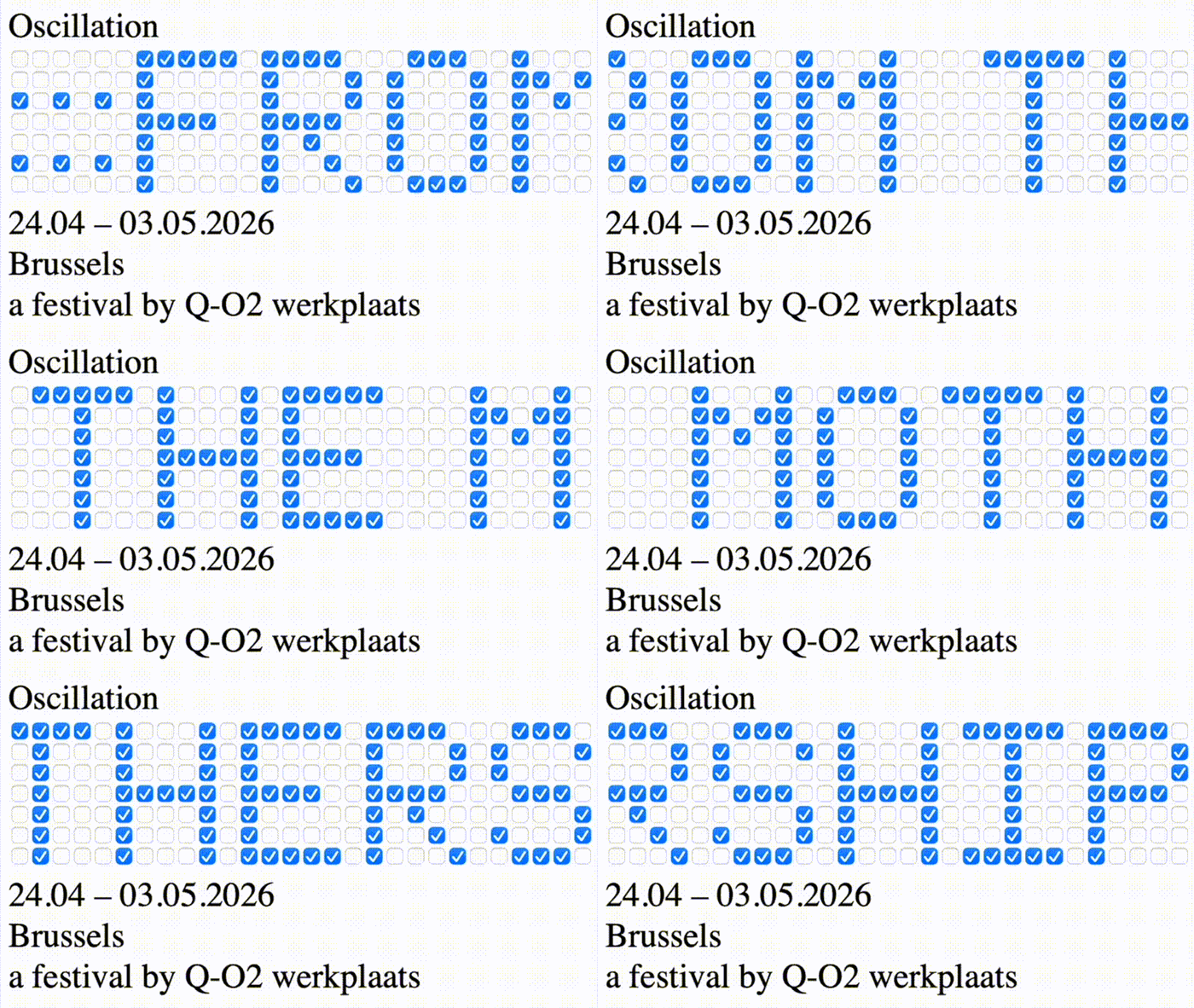
Oscillation ::: from the Mothership focuses on the technologies, tools, and techniques that are an important part of the apparatus of music-making. The festival departs from the observation that cultures are shaped by the way technologies are used, rather than by the intention behind their design. But while technologies might be invented with a certain goal for use in mind and against a backdrop of specific socio-political situations, this junction can be severed and new constellations and findings can emerge. Historically, new technologies have in this way often opened up spaces for marginalised or excluded artists to realise their music without constraints such as manuals or a canon.

Although technology has always been an important determinant for the creation of music, the advent of electricity and electronic musical instruments brought about rapid change, giving rise to a wave of new formats, sounds, proceedings, or relations to the public. As new technologies have destabilised and pluralised traditional ideas of mastery, they have changed not only what music sounds like, but who it is produced by.

In this festival edition, we want to explore some aspects of this observation with the aim of unboxing technologies: understanding what is inside the box offers the opportunity to demystify these technologies and to use them freely and in alternative ways. This concerns the materiality of tools, including their ecological impact and the emergence of artificial intelligence; but we also want to honour the possibilities of vernacular craft, of hacking and open-source cultures, and the role that spaces play in creating inclusive cultures.

In our reflections, play is a powerful alternative to capitalist power which creates desires around tools to serve the market economy. DIY movements propose ways to hack this link with the aim of experimenting, opening, understanding, and repairing, foregrounding in this way also the ecological impact of the technologies we use in daily life. By doing this, in the last century new technologies have spurred many meaningful reflections about the social and political charges that technology can transport. Feminist, post-humanist, and post-colonial theory have articulated how technology can speak to the imagination.

The festival is part of tekhne, a project by Q-O2 and five other European partners. The research activities and events carried out during this project have helped to shape the festival program. The public will be able to participate in labs and workshops, and experience on-site projects as well as a number of concerts and installations aligning with this year’s topic. We want to celebrate technology, the doing ourselves and doing together.

Oscillation ::: from the Mothership
24 April - 3 May 2026

More information

Event: أحمد [Ahmed] at Artefact Sound [CANCELLED]

© حمد [Ahmed]

Bringing heavy rhythmic music based on repetitive patterns and swinging syncopations, أحمد [Ahmed] delivers a powerful punch in the stomach that subsequently transitions into a deep feeling of ecstasy. The foundation for the quartet is the music of Ahmed Abdul-Malik, a now deceased New York bassist and composer who introduced Arabic and East African influences into jazz music. His thoughts and melodies shine through in the music of أحمد [Ahmed], which is formed by some of the best European improvisational musicians: Pat Thomas (piano), Antonin Gerbal (drums), Joel Grip (double bass), and Seymour Wright (alto saxophone). Their albums, released from 2017 to the present, are unparalleled journeys that excel in technique and endurance, but are still at their best performed live.

This event is part of Artefact Sound and highlights the release of a book compiling writings by and about حمد [Ahmed], published by In vitro in collaboration with Echoes of Dissent (KASK & Conservatory / School of Arts).

Edited by Stoffel Debuysere, Jef Lambrechts and Will Holder

It will be preceded by an extensive conversation with the members of the quartet—discussing improvisation as investigation and music making as a medium of thought; the music and ideas of Ahmed Abdul-Malik and the Arabic and Muslim roots of Jazz; the importance of probing in and into ‘jazz’ and the possibilities of new jazz notation. أحمد [Ahmed] as an accommodating and radical vision of synthesis, open structure(s) and a shared
space of (re-)imagination and (re-)interpretation.

Moderated by Stoffel Debuysere

STUK
Sat 14 February 2026, 20h00
Naamsestraat 96
3000 Leuven

More information

Event: Second Sundays #64 with Jef Lambrechts

© Jef Lambrechts/Q-O2

Second Sundays is a monthly series initiated by Q-O2. Each session a new guest is invited to share an insight into their own listening, playing and speaking about a selection of sound and music that is important to their thinking or practice. The sessions try to put value on listening to recorded music in a social setting as a space for discussion.

Jef Lambrechts is an organiser of sound. He is convinced that music remains to be discovered—that it’s still hidden. By cultivating organising as an art form, he seeks to evoke new ways of study and nurture an artistic community often overlooked within commercial and institutional contexts. He has been tied to several organisations, including Les Ateliers Claus and Meakusma, and is the co-founder of In vitro, a project space and event series dedicated to promoting contemporary (experimental) music and sound art through live performances and occasional discursive events.

For this 64th edition of Second Sunday’s listening session, Jef will share influences that stem directly from his drive to set up such events—a short history, if you will, perhaps uncovering a few answers to the “why” along the way. Or not.

Cocktail of the month: Pisco Sour

Q-O2
Sun 9 November 2025, 17h00
Koolmijnenkaai 30-34
1080 Brussels

More information

Event: Max Eastley & Rie Nakajima listening session

© Max Eastley & Rie Nakajima

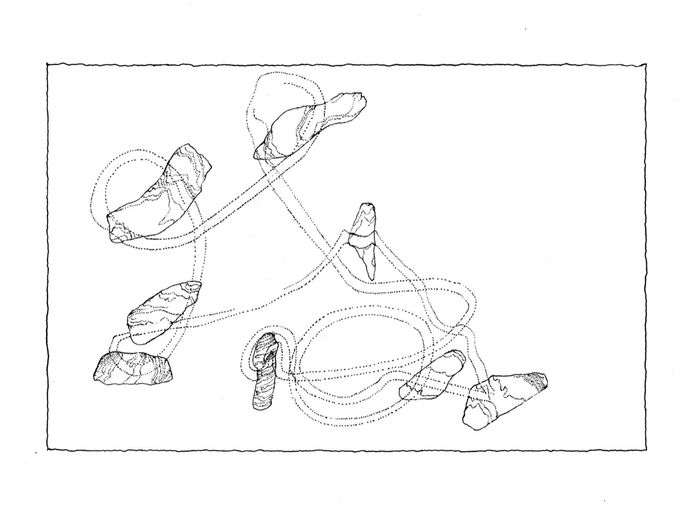
Preceding their live performance at STUK on October 15th, Max Eastley and Rie Nakajima will host a listening session the day before at the Royal Academy of Fine Arts & Conservatory of Ghent (KASK).

Both artists have long-standing individual artistic practices centered around sound and sculpture.

Max Eastley is an internationally recognized artist who combines kinetic sculpture and sound into a unique art form. His sculptures exist on the border between the natural environment and human intervention and use the driving forces of electricity, wind, water and ice.

Rie Nakajima creates sounds using combination of motorized devices and daily objects, either in installation form or during performances. Fusing sculpture and sound, her artistic practice is open to chance and the influence of others. Both artists have performed with numerous other artists and musicians, and started playing together in February 2025.

The research cluster The Art of Resonance — The Resonance of Art is organizing a series of informal listening sessions with international artists and researchers, with an eye (and ear) to cultivating a sonic sensibility and relationality.

This event is a collaboration between KASK & Conservatory / School of Arts Gent and In vitro, supported by Flanders State of The Art.

Herculeslab
Tue 14 October 2025, 16h00
Campus Bijloke, Cloquet
Godshuizenlaan 4
9000 Ghent

More information

Video: Conversation with Fred Moten & Brandon López

© Martijn Van de Wiele

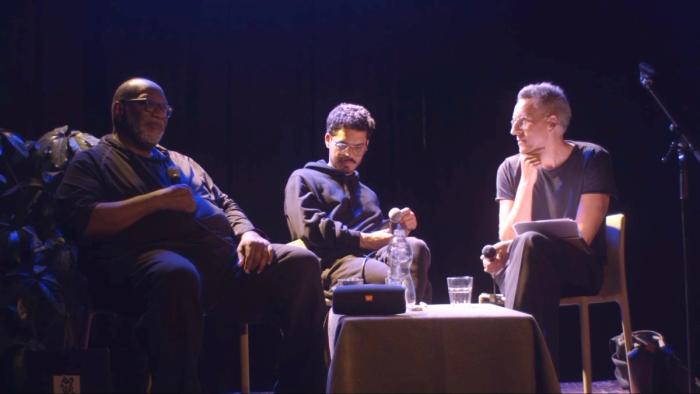
An extended conversation with Fred Moten and Brandon López at Pianofabriek, Brussels, on April 29th, 2025—discussing their thought and practice, music and language, improvisation and politics, jazz and study.

Organized in the context of Echoes of Dissent (Vol. 7), a collaboration between KASK & Conservatory / School of Arts Gent, Courtisane and In vitro.

With the support of the Flemish Government, Flanders State of the Art, KU Leuven Commission for Contemporary Art and The Royal Conservatory of Brussels (EhB).

Footage by Martijn Van de Wiele
Moderated by Stoffel Debuysere

Watch

Article: Alice Notley (1945—2025)

© Poetry Foundation

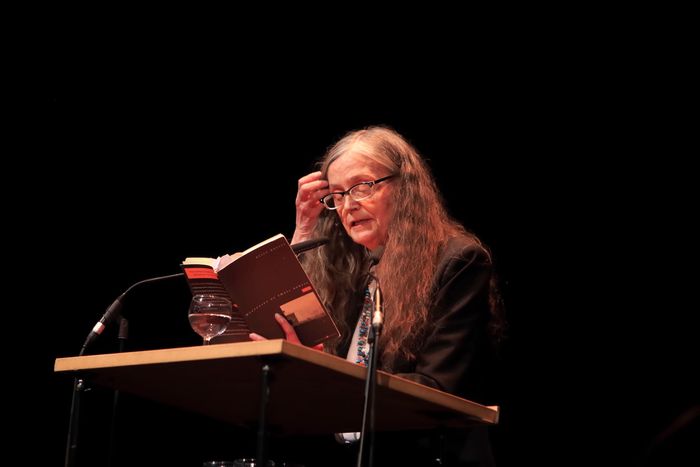
We note with great sadness the passing of renowned poet Alice Notley, who died on Monday, May 19th, in Paris, where she had lived for the past several decades. She was 79. Her death marks a tremendous loss of a unique and deeply inspiring voice—one that has been profoundly influential among both literary and sound practitioners.

Notley was one of America’s greatest poets. She wrote across narrative and epic and genre-bending modes to discover new ways to explore the nature of the self and the social and cultural importance of disobedience.

In vitro will present a musical rendition of Notley’s work as a homage on Thursday, May 22nd, during the book launch of Andrea di Serego Alighieri’s 'Know how to now it’s that you’re learning the segments. That aren’t sentences at all and converse with each other.'

The book’s title is derived from one of Notley’s poems; she also contributed to the publication, which features additional mentions by Will Holder. Other contributors include Phil Baber, Chloe Chignell, Nicola Masciandaro, Angela Xu, Snejanka Mihaylova, Paul Abbott, and Mayra A. Rodríguez Castro.

De Zaak
Thu 22 May 2025, 18h00
Grote Pieter Potstraat 12, 2000 Antwerp
With music by Johanna Gratzer, Jef Lambrechts (In vitro), and Will Holder

Full article

Event: Lukas De Clerck at Blank Forms

© Lukas De Clerck

Originating in ancient Mesopotamia, and remembered best for its preeminence in classical Greco-Roman vase paintings, the aulos is a double-reed double pipe, which produces a sound likened to the buzzing of wasps or a “shrill, roaring lotus.” The aulos went extinct over a millennium ago, but in its time, the instrument was often characterized as the dark, Dionysian foil to Apollo’s sweet, harmonic lyre. Its microtonality and rough timbre were out of place in an era that ascribed the highest aesthetic value to mathematical perfection; accordingly, Horace derided the instrument as vulgar and impetuous, while Pratinas said it was fit to accompany “only door-to-door carousels and the brawling of drunken young men.” Though distant descendants persist, including the oboe and the bassoon, there are only fifteen extant aulos pipes or pipe sets remaining.

Lukas De Clerck, a musician and sound artist based in Brussels, has spent years on the archaeo-musicological project of reviving the aulos. But while classicists and luthiers have often been interested in conserving auloi as historical artifacts or creating exact replicas, De Clerck has focused on designing a living instrument, liberated from traditional expectations about how it should look, sound, or be played. By doing so he is crafting a new context for his chosen instrument in contemporary music.

This event is a collaboration between Blank Forms and In vitro, supported by Flanders State of The Art.

Blank Forms, 1D
16 April 2025, 20h00
468 Grand Ave
Brooklyn, NY 11238

More information

Article: 'In Fred Moten’s Music, Theory Is Put Into Practice' by Nate Wooley

© Cameron Mcleod

In the introduction to his 2003 essay collection In the Break, Fred Moten lays out the importance of sound in his theoretical writing. He refers to a short parenthetical embedded in a scene from Narrative of the Life of Frederick Douglass in which the author recounts being forced to watch his Aunt Hester being whipped. Douglass describes witnessing the brutality as the event that opened his eyes to slavery’s innate cruelty. His mercilessly frank retelling refers to Aunt Hester’s “heart-rending shrieks.” It was those shrieks—specifically what Douglass heard—that stirs Moten to explore the bridge between the solidity of text and the ephemerality of sound. In his own words, he’s trying to get at “the implications of the breaking of such speech, the elevating disruptions of the verbal that takes the rich content of the object’s/commodity’s aurality outside the confines of meaning.” In my reading, Moten wants his work to tap into the moments when words aren’t enough, and when sound—a shriek, a note—is the only way to express the complexity of being human.

The Nation, Books & the Arts / March 26, 2025

Full article

Event: Oscillation festival 2025

© Q-O2

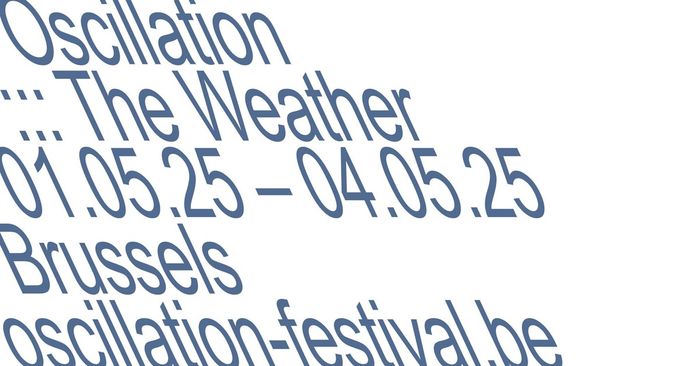
The 2025 edition of the festival Oscillation ::: The Weather will depart from practices around field recording. Field recording can be thought of as the registration of one's listening environment. This registration may happen through microphones and a device, but might also include registration via the ear to memory or language. The field might be inside, outside, urban, rural, or domestic. Field recording can be intended as archival observation, as material for musical composition or radio emissions, or as listening practice. With such a broad scope of practices, it can raise questions from authenticity to ethics of authorship and appropriation, to geographies and changing environments.

The festival will link field recording to the weather as phenomenon, as metaphor, and as concept, able to cause poetic and beautiful effects but also to manifest radically destructive events. In both field recording and the weather we are reminded that environments are in perpetual change. They are affected by outside influences, and much of the surprise and interest in a place is the way it constantly throws up new constellations of events and impressions.

There are patterns to weather, seasons and weather systems, but it remains impossible to fully predict and still more impossible to control.

Exploring weather as a general condition, informed by climate, temperature, humidity, pressure, and changes in atmosphere, the festival will present and discuss various practices of field recording and their use in art and science.

Performances, walks, on-site workshops, and talks will provide the opportunity to experience different modes of listening to the environment, permeated by the various and varying phenomena that weather comprises.

The festival takes place over four days and six locations, and will be broadcast via a continuous radio stream.

Oscillation ::: The Weather
1-4 May 2025

More information

Event: Hear Here — a sound art festival

© STUK

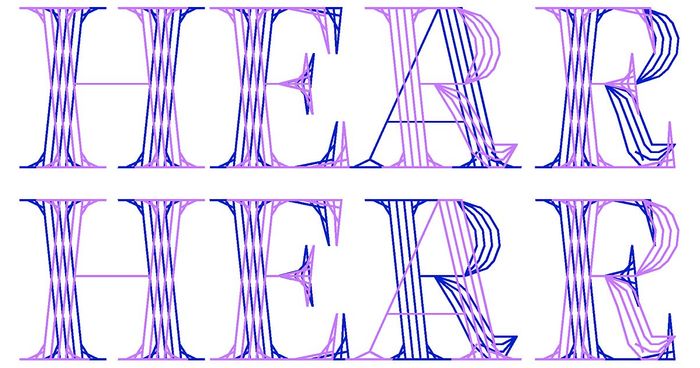
Hear Here takes you on a wal­king tour of sound art in Leuven. Fifteen art­works about sound or silen­ce rever­be­ra­te through Leuven’s his­to­ri­cal heri­ta­ge sites. On the occa­si­on of KU Leuven’s 600th anni­vers­a­ry, this edi­ti­on focu­ses on his­to­ri­cal uni­ver­si­ty buil­dings. With a map in hand, you shall walk from a medie­val water­ga­te, past an emp­ty school, to an impo­sing baro­que cha­pel. At each site, a sound instal­la­ti­on enters into dia­lo­gue with acous­tics and archi­tec­tu­re. Historic works by gre­at sound-art pio­neers are fea­tu­red alongsi­de new instal­la­ti­ons by Belgian artists.

Artists:
Budhaditya Chattopadhyay, Anri Sala, Adam Basanta, Rudy Decelière, Christina Kubisch, Jonáš Gruska, Mariska De Groot, Lucy Andrews, Franziska Windisch, Els Viaene, Aernoudt Jacobs, Dick Raaijmakers, Susan Philipsz, Anouk Kellner, Edwin van der Heide

Locations:
STUK (start & end) → Dijlepark → Hollands College → Justus Lipsius Tower → Sint-Agnes School → 30CC/​Chapel Romaanse Poort → BAC ART LAB → M Leuven → KADOC

More information

Publication: Reader X-Ray Hex Tet

© Ran De Vos/In vitro

Reader compiled by X-Ray Hex Tet in the context of Echoes of Dissent (Vol. 5).

What could it mean to practice politics by performing music? How could musical improvisation – as a process of collectively searching for sounds and for the responses that attach to them, rather than thinking them up, preparing them and producing them – reconfigure our sense of the world? How can we experience and understand music not simply as what presents itself in the context of sound-phenomena-organized-in-time-and-exchanged-for-cash within the factory of post/industrial capitalism, but also, as an aesthetic-poetic-political mode of enquiry, a mode of perception, a way of learning and sharing – in and outside of the vibrations of sound or the marks of language?

X-Ray Hex Tet — 19-20 October 2024 at Les Ateliers Claus, Brussels. Part of the research project Echoes of Dissent (KASK & Conservatory / School of Arts Gent).

This publication is a collaboration between Courtisane, Auguste Orts and In vitro, supported by Flanders State of the Art, VGC Brussels and Q-O2.

Edited by Stoffel Debuysere
Design by Ran De Vos
Printed by Risiko Press

Full document

Video: @xcrswx live at IV13

© Crystabel Riley

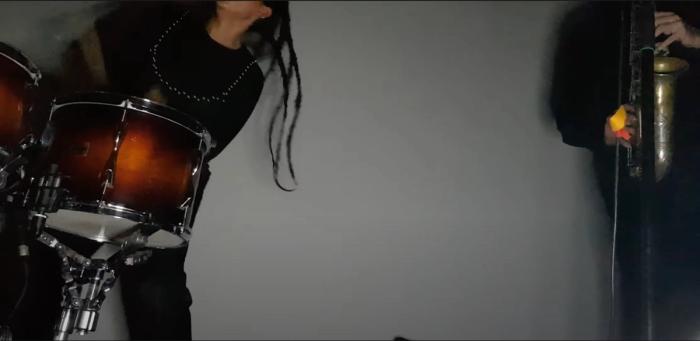
Live performance of ‪@xcrswx‬ at les ateliers claus for IV13 on December 9th, 2023.

@xcrswx is the poly-intra-media duo of Crystabel Riley and Seymour Wright. It contrasts the LIVE (evolved sounds/patience/relentless-ness) and the ANDROID (cropped media [sounds+visuals]/impatience/edits). Previous releases include 'Call Time/Hard Out ' and 'Fixes', together with experimental musician Lolina (aka Inga Copeland) on Feedback Moves, and 'Lookbook Digital' which was released on Cafe OTO's Takuroku Imprint.

Footage by Crystabel Riley
Music by Crystabel Riley & Seymour Wright
Mixing by Arnaud Chamay

Watch